On Air Now
Gold Radio Through the Night 12am - 4am
14 September 2026, 10:36


Otis Redding packed a stunning number of hits into his all-too short career.
Otis Redding died tragically young, perishing in a plane crash in 1967 when he was just 26 years old.
But in his short career, he managed to record some of the greatest music of the era, much of which has endured to this day.
He released six albums in just three years during his lifetime, with a string of posthumous releases rounding out the decade.
If you're a massive Otis fan looking to relive his greatest moments or a newcomer searching for his biggest and best hits, we've got you covered.
Move through our rankings below for Otis Redding's greatest songs.

Tramp
The last album Otis Redding released during his lifetime was King & Queen, a collaborative duet album with Carla Thomas, which featured regular Otis players Booker T & The M.G.'s as well as pianist Isaac Hayes and the Memphis Horns.
Its lead single was 'Tramp' written by Lowell Fulson and Jimmy McCracklin and already a single for Fulson. Otis and Carla's gorgeous version was a bigger hit, getting to number 26 in the US, and it did even better over here, reaching number 18 in the UK.

I've Been Loving You Too Long
Otis Redding co-wrote 'I've Been Loving You Too Long' with Jerry Butler.
A stunning, heartrending emotional soul ballad, which finds Otis imploring his other half to let him keep on loving her ("I love you with all my heart and I can't stop now"). It soared to number 2 on the R&B charts and 26 on the Hot 100.

(I Can't Get No) Satisfaction [2008 Remaster]
Otis Redding was an incredible songwriter, but he was also a fine interpreter of existing work.
And we're not just talking blues or souls numbers. Otis could play some of the biggest hits of the moments and make them his own.
That included '(I Can't Get No) Satisfaction', a hit earlier that year for The Rolling Stones.
"I use a lot of words different than the Stones' version," Otis quipped about his tweaks to the lyrics, that he hadn't learned properly. "That's because I made them up."
And his use of brass got the blessing from Keith Richards, who had always imagined it that way.
"The riff was in essence not meant for the guitar," Richards said. "Otis Redding got it right when he t recorded it because it's actually a horn riff."I
Ronnie Wood added: "When we play it today live we still have that essence of the soulful treatment that Otis gave 'Satisfaction'."

Day Tripper
If you can beat the Stones at their own game, then why not The Beatles?
Again, it was a quickfire cover, out in the shops not too long after the original. The Beatles had taken a big bit of influence from Otis on their own 'Drive My Car' (and to an extent 'Day Tripper' itself) as they embraced Soul (albeit in a Rubber-y) way.
So Otis returned the favour with his take on 'Day Tripper', which arguably outstrips the original with its off-the-leash, gritty, gravelly brass power.

That's How Strong My Love Is (2020 Remaster)
Written by Roosevelt Jamison 'That's How Strong My Love Is' was first recorded by soul man O V Wright in 1964.
Otis Redding got his cover out the following year and scored a number 18 hit on the R&B chart (and 74 on the pop chart), with the song being one of his many highlights of his classic album The Great Otis Redding Sings Soul Ballads.
That opened the floodgates: The Rolling Stones, The Hollies, Percy Sledge, Candi Staton, Humble Pie, Bryan Ferry, Taj Mahal, Roland Gift and Mick Hucknall, among others.
But few if any of those wrung every bit of soul of the song and its gorgeous lyrics ("I'll be the weeping willow, drowning in my tears") than Otis.

Otis Redding - These Arms Of Mine (Official Music Video)
In a way, where it all really began for Otis Redding,.
He wrote the song himself when he was part of Pat Teacake's Band (Pat got top billing, even though Otis was the singer/songwriter an Johnny Jenkins was a lead guitarist).
The story is that Atlantic Records' rep Joe Galkin was in town to check out Jenkins, but when the main set ended earlier, Otis's bonus performances of 'Hey Hey Baby' and 'These Arms Of Mine' won him a deal at Stax Records.
'These Arms of Mine' (with 'Hey Hey Baby' on the flip) became Redding's first hit single, selling over 800,000 copies.

My Girl
Yes, The Temptations version – written and produced by Smokey Robinson and Ronald White of The Miracles – is the original, probably superior, and best remembered version of 'My Girl'.
But Otis Redding's version, released just a few months later, was the first to break through in the UK and actually was the bigger hit here, peaking at number 11 in the singles charts.
No bells, no whistles, stripped back, almost conservative brassy swing backing track as the perfect showcase to Otis's gorgeous voice.

Respect
As well as writing his own songs and making hits out of songs already performed by others, Otis managed to write one of the biggest songs from another superstar's career (though its genesis is a little complicated).
Aretha Franklin's version of 'Respect' is, with (ahem) respect to Otis, the one you're going to take on a desert island, all feminist swagger and power. Her inversion of the gender dynamic elevates the track.
But that doesn't diminish the quality of Redding's own version of his song one little bit. Otis actually had reworked the song from a ballad brought to him by Earl 'Speedo' Sims of The Singing Demons.
New lyrics, new tempo and then it was his. (Percy Welch claimed a guitarist at Bobby Smith's studio actually came up with the first version, to further complicate matters). Otis's version ("All I'm askin' is give me a little respect when I come home") was a great song and decent R&B hit, even before Aretha later took it stratospheric.

Otis Redding - Try a Little Tenderness (Official Audio)
Otis's version of 'Try A LIttle Tenderness' is one of the greatest records of all time. There's a fair argument that maybe it should even top this list, though even beyond pure sentimentality our actual number one is just as perfect.
But what's so great about 'Try A Little Tenderness' is when you put it up against the first version of the song.
With music written by Harry M. Wood, and Jimmy Campbell and Reg Connelly providing the lyrics, the Ray Noble Orchestra provided a deliciously slow foxtrot for Val Rosing to croon over. All lovely stuff, but a world away from what Otis did with it.
Sam Cooke's cover added a bit of soul but cleaved relatively close to the original, but Isaac Hayes and Booker T & the MGs totally reconstructed the song from the ground up (taking a little bit of this and that from Duke Ellington-Lee Gaines's 'Just Squeeze Me (But Please Don't Tease Me)'.
It starts off as a slow, soul ballad before the two and a half minute mark (that's where plenty of songs would end) it truly explodes into an uptempo R&B-tinged powerhouse.
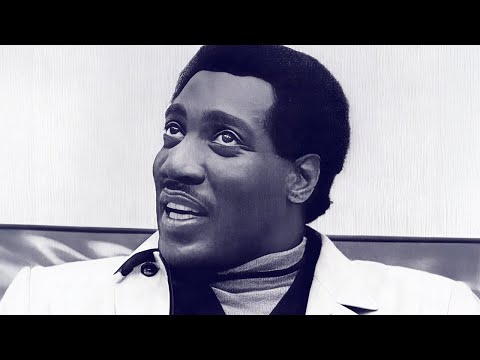
Otis Redding - (Sittin' On) The Dock Of The Bay (Official Music Video)
Otis Redding died on December 10, 1967. It was a month later that '(Sittin' On) The Dock of the Bay' was released, a posthumous single that cemented his legacy as one of the all-time great soul singers, and underlined just what a talent we had lost.
It was written by Otis with producer Steve Cropper, with Redding starting off when he was living on a houseboat at Waldo Point Harbor in Sausalito, California, courtesy of Bill Graham.
It was recorded on November 22 with overdubs on December, just thraysee d before Otis died. There were apparently plans to re-record the song and give it a more gospel feel, but Cropper worked with the recordings he had, overlaying those beach sounds per Redding's request to make the flawless masterpiece we all know and love.
Unsurprisingly given the quality of the song and sadness for Otis's death, the song topped the Billboard Hot 100, and also went to number three in the UK.


