On Air Now
Evenings on Gold Radio 7pm - 10pm
6 October 2026, 12:00


How Dory Previn went from movie tune lyricist to a groundbreaking singer-songwriter.
The 21st century has seen the charts packed with tunes by countless confessional singer-songwriters spilling out their personal lives in their music.
Even if they don't realise it, they probably owe a debt to Dory Previn.
Dory started off as far away from real life first-person confessionals as you can imagine, crafting songs for the movies to be sung by film stars.
After a high profile (and controversial) marriage break-up, she poured her heart, soul and voice into her own records.
But how did Dory strike out on her own, and what happened to her after her half-dozen groundbreaking albums in the 1970s?

Dory Previn was born Dorothy Veronica Langan on New Jersey on October 22, 1925 (or 1929, depending on who you talk to) and grew up in Woodbridge.
She was the eldest daughter in a somewhat troubled Catholic home. Her dad had been gassed during his service in the First World War and later suffered depression and mental ill health.
Dory attended the American Academy of Dramatic Arts but just for one year, before financial issues meant she had to leave.

My Heart Is a Hunter
Dory Langdon had various creative jobs in her early years. She was reported to have been an actress, model and chorus girl, as well as working as a seceratry, in sales, accounting and as a waitress while she honed her writing skills.
According to an article in People in 1977, Dory had an early, brief marriage, but details of this supposed entanglement are hard to come by.
What we do know is that she started writing her own material, and was spotted by MGM movie producer Arthur Freed, getting hired as a junior lyricist in 1955, and was paired with conductor/arranger/pianist André Previn.

Again, the record is hazy. Either they started collaborating then, or she got dropped after six months before they could really kick things off. She then went on to write for TV, including the Gerald McBoing Boing cartoon.
What the historical record does show is that she married Previn in 1959, and they collaborated plenty after that.
Dory actually recorded her first album before she and André married. The Leprechauns Are Upon Me was released in 1958 (and later re-released as Dory & Andre Previn in 1983). André played piano on the record (jazzman Kenney Burrell played guitar), and wrote a couple of its songs, too.

The Far Away Part of Town
The album didn't make much of an impact, but the now husband-and-wife team of André and Dory Previn wrote a string of successful songs together for the movies, sung by some of the biggest stars of the day.
A couple of their their songs even won Oscar nominations: 'The Faraway Part of Town' as sung by Judy Garland in Pepe, and 'A Second Chance' as sung by Jackie Cain for One, Two Three.
They also wrote songs for the likes of Rosemary Clooney, Bobby Darin, Sammy Davis Jr., Doris Day, Tony Bennett, Frank Sinatra and many others.
They collectively wrote five songs for the Valley of the Dolls soundtrack in 1967, with Dionne Warwick later covering the main theme.
Beware Of Young Girls
By the end of the 1960s, as well as their collaborative work, André Previn was scoring major success as a conductor, travelling the world to work with the likes of the London Symphony Orchestra.
It was in London that he started a fling with the then-23-year-old Mia Farrow, who was herself married to Frank Sinatra.
Farrow became pregnant by André who then left Dory and filed for divorce. Mia and André had twins together in February 1970 and they married later that year.
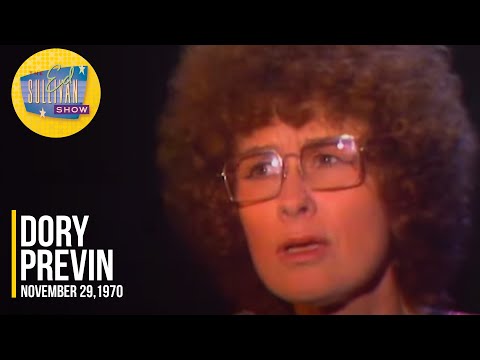
Dory Previn "Scared To Be Alone" on The Ed Sullivan Show
The breakdown of her marriage to André led to Dory, who had already been hospitalised in 1965 due to mental ill health, to be hospitalised again. She was treated with electroconvulsive therapy there.
Without André, she won a third Oscar nod for 'Come Saturday Morning' from The Sterile Cuckoo, written with Fred Karlin and a hit for The Sandpipers.
But she was soon going to channel all that turmoil into something much more personal.
"I was always afraid to write music," she said in 1970. "I wouldn't have presumed to with a musician like André around the house.

With My Daddy In The Attic
"But I play a little guitar. So I started working them out on the guitar, thinking I could interest some singer in recording them and that’s how all these songs were born."
Dory Previn released the stunning On My Way to Where in 1970, which featured among its standouts the creepy child abuse study 'With My Daddy In the Attic' and barely disguised attack on Mia Farrow 'Beware of Young Girls' ("Beware of young girls who come to the door ; Wistful and pale, of twenty and four").
"I'd been writing for films for several years, but nothing I could say in those theme songs had not been said better by many songwriters before me; and gloriously by poets," Dory told the NME in 1973.

Colm Wilkinson & Dory Previn - Doppelgänger
"So what did I do? Did I want to go on and write more poetic lyrical metaphors on things already said? Or did I want to write about the one thing I can only presume to be an authority on: myself?"
Dory released a run of confessional singer-songwriting records: Mythical Kings and Iguanas (1971), Reflections in a Mud Puddle/Taps Tremors and Time Steps (1971), Dory Previn (1974) and We're Children of Coincidence and Harpo Marx (1976)
She hadn't left the world of movies totally behind, with 1972's concept album Mary C. Brown and the Hollywood Sign exploring the world of Hollywood misfits.

Twenty-Mile Zone (Live At Carnegie Hall)
It's fair to say that Dory Previn was (rightly) annoyed at her whole life story being pegged to her decade-long marriage to André and its unpleasant end.
"I am so bored with the references to André," she told People. "I wrote one song about my relationship with him – 'Beware of Young Girls' – and ever since every interview refers to it.
"Look, I write music, I write lyrics and I am a concert performer. I have written two books. What do I have to do to be just my own person, where my biggest credit doesn't end up that I was the former Mrs. André Previn.
Doc'n Roll FF 2024 | Dory Previn: On My Way To Where | Trailer
"It happened eight years ago. There's no blame, no guilt, no nothing. I don't know why they continue with it when it's a boring pot of crap."
Too right.
And to show that there were no ill feelings, they later reconciled and in 1997, they collaborated on The Magic Number, which was performed by the New York Philharmonic with Sylvia McNair as soprano.

Dory Previn on Mia Farrow and Andre Previn, Valley of the Dolls and addiction to pills. #movies
1976's We're Children of Coincidence and Harpo Marx was Dory Previn's last traditionally released album.
While she was absent from the record stores, she still continued to create.
There was a live musical review Children of Coincidence in 1980. A couple of memoirs (Midnight Baby: an Autobiography and Bogtrotter: An Autobiography with Lyrics).
There was a one-woman musical play Shcizo-phren. And, in 1983, August 6, 1945, a musical statement on nuclear war that she co-starred in with in LA at the Tyne Daly, Judd Hirsch, Thelma Houston and Bernadette Peter.

Dory Previn - Planet Blue
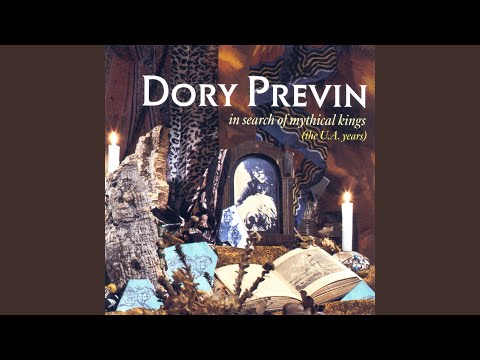
There were compilations, One A.M. Phonecalls, In Search of Mythical Kings: The U.A. Years and The Art of Dory Previn.
In 2003, she self-released the download only album Planet Blue
"To everyone appalled by the devastation done to this little blue planet, to this, our Mother Earth, who shelters and feeds us, I offer this CD," she said.
"To everyone yearning for peace, please copy it. Give it to your friends. Make as many more as you wish. And, please, pass on copies to your friends. Thank you. Dory."

Dory Previn married Joby Baker in 1984, and he survived her when she died on Valentine's Day, February 14 at her farm in Southfield, Massachusetts.
Previn, who had suffered several strokes later in life, had died of natural causes. She was 86 years old.
Her life was the subject of the 2024 documentary film Dory Previn: On My Way To Where.


