On Air Now
Late Night Gold Radio 10pm - 12am
25 October 2026, 23:40 | Updated: 27 October 2026, 07:18


For a good few years, Liverpool was the centre of the universe when it came to British popular music.
On 25th May 1960, The Cavern held its first beat concert, a local spin on the rock 'n' roll and R&B music that was brought into the city by American sailors.
What was initially a jazz venue swiftly became the city's dedicated live music hub, with over 300 Liverpudlian bands making up the music circuit who played venues like The Cavern, Jacaranda and The Iron Door.
The acoustic skiffle bands became a thing of the past – kids wanted electric guitars, and they wanted to dance to a beat.
By 1961, Liverpool's local scene became so vibrant that Bill Harry (a friend of John Lennon and Stuart Sutcliffe) started The Mersey Beat magazine, which coined the term and helped make music history.
Many of the local bands did stints in Hamburg to cut their teeth, but it was at home where the demand for these budding bands was insatiable.
In 1963, Merseybeat went nationwide, exploding into the charts and dominating the airwaves – their American peers couldn't get a look in when it came to the UK pop charts.
Two years later however, the fire behind the Merseybeat craze fizzled out, as the bands core to the scene either broke up or moved on to greater pastures.
That said, here are the ten very best acts associated with the Merseybeat scene. Read on to find out tops the list:

Kingsize Taylor and the Dominoes - Bad Boy (Remember Liverpool Beat 37)
Soon after their formation in 1957, Kingsize Taylor and the Dominoes swiftly became one of the best rock 'n' roll bands in the Merseyside area.
In fact, they are widely regarded as the first Merseybeat band, led by the steam-rolling rocker Ted "Kingsize" Taylor and his distinct chequered jacket.
Whilst the band were enormously influential throughout Liverpool, Kingsize Taylor and the Dominoes achieved scant success outside Germany where they signed for Decca Records.
Commercial success may have evaded them, but the band remain an icon of the Merseybeat era.

You'd Better Move On - The Roadrunners (Liverpool)
A prominent regular fixture at local venues like the Cavern Club and Hope Hall, The Roadrunners made their mark playing a slightly different style of music than their peers.
Whilst the Merseybeat scene was based around American R&B and rock 'n' roll, The Roadrunners' inspirations drew from Chicago blues artists like Muddy Waters, Bo Diddley, and Howlin' Wolf.
These kinds of artists were inspiring bands down south, including a little known act called The Rolling Stones.
George Harrison even praised the Stones during their infancy by quipping that they were "about as good as The Roadrunners".

The Hippy Hippy Shake
Who hasn't done 'The Hippy Hippy Shake' on a night out?
That's probably because Merseybeat band The Swinging Blue Jeans took the Chan Romero's 1959 to No.2 in the UK charts in 1963 – which is now arguably the more famous version.
A former skiffle band that reinvented themselves as sharp-suited rock 'n' rollers after a stint in Hamburg, The Swinging Blues Jeans probably had every local player in Liverpool as a band member at some point in their history.
Terry Sylvester was one such musician, who later joined The Hollies replacing Graham Nash after he left for America's West Coast.

Rory Storm & the Hurricanes
The band who were deemed the most instrumental in transforming the Cavern Club into the Liverpool's zeitgeist-y venue was Rory Storm & The Hurricanes.
With a young Ringo Starr on drums, they ripped into rock 'n' roll during a jazz festival held at the venue in 1960 which turned the Cavern Club upside down.
Obviously, Ringo later left to join a much bigger band (I wonder who....) after spending three years with the group, and the group later fizzled out with new charting hits to their name.
Still, Rory Storm & The Hurricanes are baked into Liverpool folklore as the band who kicked off the initial Merseybeat mania.

The Liverbirds - Diddley Daddy (Beat Club, 1965)
Taking their band name from the fictional liver bird, a symbol of their native Liverpool, The Liverbirds are the only all-female group to make a name for themselves during the Merseybeat craze.
It so happens, that The Liverbirds were one of the world's first all-female groups, full stop.
Despite John Lennon claiming that 'girls can't play guitar', his remark spurred The Liverbirds on to prove him wrong.
A male dominated scene didn't dampen the band's acclaim, though as as band who only recorded covers, they didn't achieve as much success in the UK as they did in Germany.
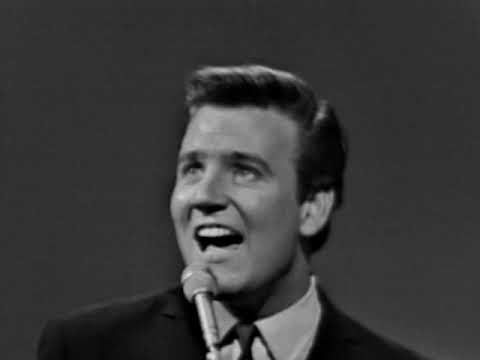
Billy J. Kramer With The Dakotas "Bad To Me" on The Ed Sullivan Show
A Liverpool singer backed by a band from Manchester, Billy J Kramer and the Dakotas were one of the only Merseybeat bands to make headway in America.
They certainly had some clout on their side however...
The band were managed by Brian Epstein. This meant they were bestowed with a handful of songs written by John Lennon and Paul McCartney that weren't deemed right for The Beatles such as 'Bad To Me' and 'Do You Want to Know a Secret?'
Despite their success during the British Invasion, Kramer left the Dakotas after the death of Epstein and never quite achieved similar levels of fame.

Cilla Black - Anyone Who Had A Heart (Live)
One of the city's defining voices, Cilla Black helped to put Merseybeat on the UK's pop chart map.
Dubbed the 'Queen of Merseybeat', the singer even owes her name to the scene – her name was mis-printed in the Mersey Beat magazine, so Cilla kept it as her stage name.
She earned her stripes singing alongside local bands at the Cavern Club before being given a chance to shine herself, with John Lennon a vocal supporter.
As we know, Cilla went on to score UK No.1 singles in 1964 with 'Anyone Who Had A Heart' and 'You're My World', later becoming a British national treasure.

The Searchers "Needles And Pins" on The Ed Sullivan Show
The longest-running band in UK pop music history, it all started in Liverpool for The Searchers.
The group made their name by covering American blues standards, and became one of the Merseybeat scene's greatest exports with hit singles like 'Needles and Pins' and 'Sweets For My Sweet'.
The Searchers were dubbed "the most successful Merseybeat group not to be managed by [Brian] Epstein," although, ironically, he did want to manage the band.
Still, they achieved considerable success, only finally calling it quits with a final ever show at Glastonbury Festival in 2025 with core original members Frank Allen and John McNally saying farewell.

Gerry & The Pacemakers - You'll Never Walk Alone (1963)
Gerry and the Pacemakers were at one time the biggest band to come out of Liverpool.
They won the accolade of becoming first act in chart history to have their first three consecutive singles hit No.1, with 'How Do You Do It?', 'I Like It', and the timeless 'You'll Never Walk Alone'.
You can hear 'You'll Never Walk Alone' ring out every week at Anfield, after Liverpool FC adopted the song as their own anthem, synonymous as it's become with the city.
Liverpool was a fountain of inspiration for their late singer Gerry Marsden, with 'Ferry Cross the Mersey' also emphasising the band's deep connection to their hometown.
Paul McCartney would later team up with Marsden to record a 1989 cover for charity in aid of those affected by the Hillsborough disaster.
Few bands are quite as beloved in Liverpool as Gerry and the Pacemakers, and for good reason.

The Beatles - She Loves You - "The Mersey Sound" Show (1963)
Come on, would it really have been any other band than The Beatles sitting at the top spot of the best ever Merseybeat groups? No. Absolutely not.
The Beatles weren't only the best Merseybeat band, they evolved into the world's greatest band, a cultural behemoth who changed the face of music globally.
There was a before and an after The Beatles, and Liverpool locals realised it before anybody.
The youngsters cut their teeth in Hamburg as leather jacketed teens before returning to their hometown as professional musicians with a burning ambition.
After 'Love Me Do' launched the band into the charts and the Merseybeat into the zeitgeist, Liverpool would never be the same again.
Sadly, they also sounded the death knell of Merseybeat when they moved on to new pastures with Rubber Soul in 1965. But by gum, it was good whilst it lasted.