On Air Now
Late Night Gold Radio 10pm - 12am
17 September 2026, 13:01


With and without Brian Poole, The Tremeloes were serious '60s hitmakers.
"Guitar groups are on their way out," Dick Rowe supposedly said when turning down The Beatles after their audition for Decca on New Year's Day on January 1, 1962.
But that wasn't the complete story. The same day, Decca also auditioned another beat band: The Tremeloes.
And despite their obvious qualities, it seems a little mad in retrospect that it was The Tremeloes who got the nod.
Why? In part, it was Location, Location, Location. The Beatles were based in far flung Merseyside, while The Tremeloes were from nearby Dagenham.
Sure, the Fab Four soon made up for lost time but The Tremeloes themselves had (and are still having) quite the career.
Below we take a closer look at the band Decca picked over The Beatles.

The Tremeloes were one of the biggest bands of the 1960s, but – inspired by Buddy Holly and The Crickets – they formed in Dagenham in 1958.
In the original lineup was singer Brian Poole, lead guitarist Rick Westwood, rhythm guitarist and keyboard player Alan Blakley, bass player Alan Howard and drummer Dave Munden.
And as for that fateful New Year's Day, in an interview Munden said it wasn't just a matter of distance that they beat The Beatles to the Decca contract.
"Well, I think there's probably two reasons," he said.

Like Dreamers Do (Decca Audition)
"One is the fact that when we did our audition for Decca, I think we were probably a little bit more rehearsed, more professional.
"We had our music together. Maybe The Beatles weren't totally professional. They never put their tracks together very well, as well as we did. That's maybe one reason."
He added: "And also, they came from Liverpool. We came from London, which was a lot closer to Decca's studio.
"And another reason was one of the guys that worked at Decca, a guy called Mike Smith, he was one of the top A&R guys there, he was from Essex!
"So, I think that might've helped. He lived probably two or three miles from where we lived. So he might've helped to instigate that I think."

Do You Love Me?
If you type "Tremeloes" into your computer or phone there's a fair chance you'll get a red squiggly line underneath it. "Tremeloes" just isn't (or wasn't) a word.
That's probably handy for the group in the Google era, but obviously wasn't in anyone's mind back in 1958.
"Tremeloes" is derived from the musical term tremolo. Tremolo is when you get a wibbly wobbly sound by going LOUDER and quieter and LOUDER and quieter and LOUDER and you get the picture.
The whammy bar on a guitar often called a "tremolo bar". Total misnomer. The whammy alters frequency not amplitude, so should be called a vibrato bar.
"We got our name actually from; you plugged into one of the amplifiers and it gave you the vibrato sound on the guitars," drummer Dave Munden explained.

Blue
"It was what we called a tremolo unit. And that's where we got the name of the band from."
The spelling fluctuated from Tremilos to Tremelos before they eventually settled on The Tremeloes.
Then, they became "Brian Poole and The Tremeloes".
"The reason for the change was for Brian Poole's mum," Munden said.
" She decided it would be good. We had another band, Cliff Richard and The Shadows, that were a big band.
"He was the out front singer. So, Brian Poole's mum figured we should change the name of the band to Brian Poole and The Tremeloes."
You'd have thought being called that could mean the departure of Brian would end the band, but when he left the group in 1966, they dusted themselves off, reverted to The Tremeloes and were back on their way.

Twist And Shout
After The Tremeloes won that Decca contract ahead of The Beatles, they also had their debut single out first ('Twist Little Sister' was released in April 1962, six months before the Fab Four unleashed 'Love Me Do').
But that single, and another three follow ups, failed to chart.
The Tremeloes made their mark with 'Twist & Shout', which was released on June 1963 an soared to number three.
Written by Phil Medley and Bert Berns, the song was originally released by The Top Notes in 1961, became a hit the following year for The Islely Brothers, and of course was made (even more) famous by The Beatles.
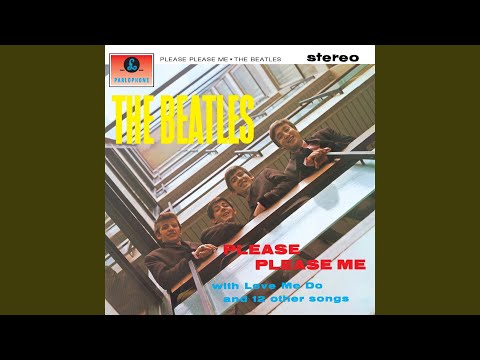
Twist And Shout (Remastered 2009)
They released it on their first album Please Please Me in March 1963, and had it lead their Twist & Shout EP four months later.
It's widely believed that The Tremeloes covered the song to hitch themselves onto the Beatles' wagon, but Brain Poole claims otherwise.
"We were doing 'Twist and Shout' on stage before we knew anybody else doing it and we felt we could have a hit with it," he later said.
"Unfortunately, we had it in the can for about a year before Decca decided to release it as a single".
No matter, as they still went top five, and follow-up cover 'Do You Love Me?' (a Berry Gordy-penned Motown classic first performed by The Contours) went all the way to number one.

Despite having his name at the top of the marquee (the band's fourth album was even called Brian Poole is Here!) and the band enjoying some real success (eight top 40 singles) Brian Poole stepped away from The Tremeloes in 1966.
That was around the time Alan Howard left on bass. Undeterred, Munden, Westwood and Blakely carried on.
They briefly reruited Mick Clarke on bass before he was replaced in turn by Len 'Chip' Hawkes by the time they got their first post-Brian album Here Come the Tremeloes out in 1967.
As for who sung after Brian's exit, everyone pitched in with Hawkes or Munden usually taking lead, with the band now a four-piece.
They took a little while to find their feet, with covers of Paul Simon's 'Blessed' and The Beatles' (them again) 'Good Day Sunshine' missing the charts, before they struck back with a number four cover of Cat Stevens' "Here Comes My Baby" followed by charttopper 'Silence is Golden', a Four Seasons' B-side from 1964.

The Tremeloes - Silence is Golden
The Tremeloes biggest hits (with and without Brian Poole) were:

Alisha's Attic - I Am, I Feel
If you think you've recognised some of the names we've mentioned above from more recent artists, you're not mistaken.
First, Brian Poole.
He's the dad of Sharon and Kelly Poole, who you probably don't remember for their number 167 single released under the name Keren & Chelle in 1988.
You probably do remember them as Alisha's Attic, who burst onto the scene in 1996 with the massive 'I Am, I Feel' and released three albums before their split in 2001.

Chesney Hawkes - The One and Only (Official Music Video)
Meanwhile, Len 'Chips' Hawke, who effectively replaced bassist Alan Howard and frontman Brian Poole when he joined the band had THREE kids with successful music careers.
His daughter Keely Hawkes fronted 1990s rockers Transister, and his son Jodie was a drummer who joined The Tremeloes live lineup in 2019.
Oh, and his son is Chesney Hawkes, who topped the UK singles charts (and scored a US number 10) with the Nik Kershaw-penned 'The One and Only' in 1991.
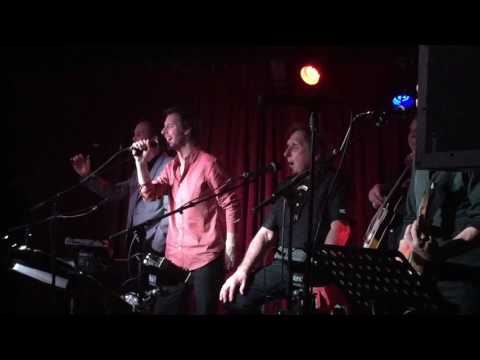
Silence is Golden -Chip, Chesney & Jodie Hawkes
The Tremeloes have had many comings and goings over the years, including brief returns for Brian Poole in 2006 and 2016.
Mick Clarke, who was a short-lived member in 1966, rejoined from 1992 to 1996, and again in 2019.
Munden was an ever-present until his departure in 2018 for health reasons, two years before his death.
Among the revolving door of talent that played with The Tremeloes over the years, we'll mention guitarist Bob Benham who was in the band from 1972 to 1981, bassist/guitarist Paul Carman who played from 1974 to 1979, and Paul Issac, who played guitar from 1975 to 1979.
And of course Chesney Hawkes gets a shout, having fronted the group in 2022 and at occasional other shows.
The current lineup is Mick Clarke, Len 'Chip' Hawkes, Jodie Hawkes, plus guitarists Richard Marsh and Eddie Wheeler.


